
The weaning guidance starts outdoor pre-release time at roughly 18 weeks . This is when the juvenile begins learning the actual sights, sounds, weather, smells and daily rhythm of the release environment while still protected.
AT A GLANCEDo these things before moving on
Use secure outdoor conditioning appropriate to the species and season.
Provide natural cover, nest/burrow space and weather protection.
The animal should forage, hide, move and avoid people normally.
VISUAL GUIDE
See the important points for this stage


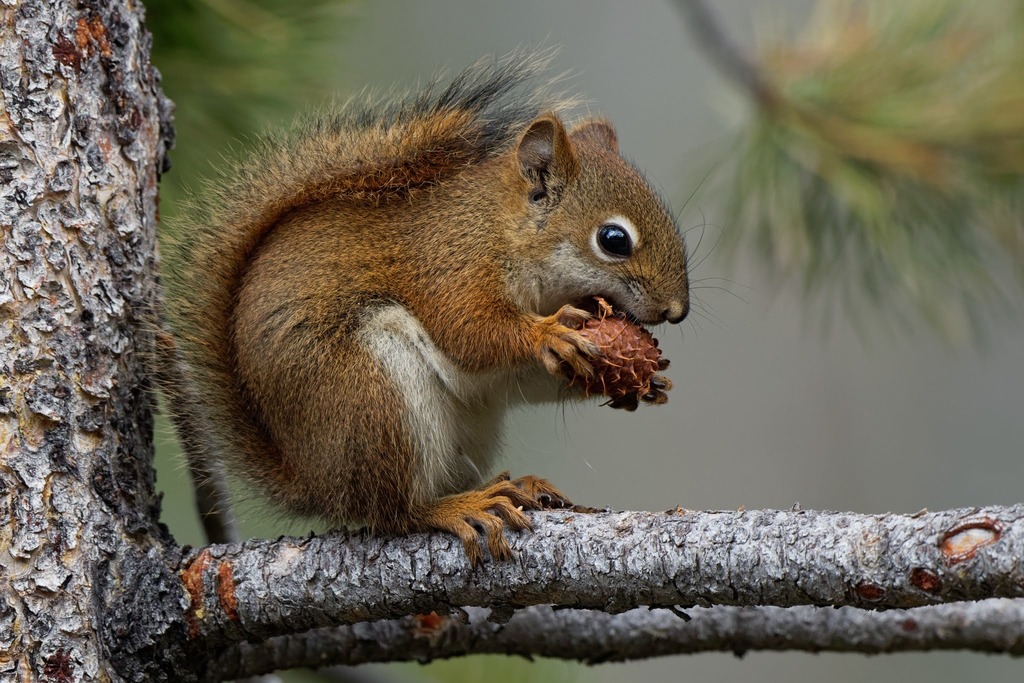

Around 18 weeks — transition to an outdoor pre-release enclosure
Pre-release enclosure requirements
- Tall, secure, predator-resistant enclosure with strong wire and reliable locks.
- Natural branches with multiple diameters and routes, including head-first descents.
- A dry, elevated nest box or sleeping shelter.
- Shade, rain protection and shelter from dangerous weather while still allowing normal outdoor acclimation.
- Placement in or immediately adjacent to appropriate release habitat whenever legal/practical.
- No access by household pets and minimal unnecessary human contact.
What the squirrel must learn here
| Skill | Ready looks like |
|---|---|
| Climbing | Fast, confident vertical movement and head-first descent. |
| Jumping/landing | Controlled branch-to-branch leaps and secure landings. |
| Nest/shelter | Uses an elevated nest box and constructs/manages bedding. |
| Foraging | Searches for and manipulates natural foods rather than waiting at a bowl. |
| Human response | No longer seeks handling, rides on people or approaches strangers for food. |
| Weather | Maintains normal activity/body condition through ordinary local temperature and weather changes. |
Food during pre-release
Continue a balanced diet and introduce more safe native browse/wild foods from the eventual release area. Scatter/hide food so the squirrel must search. Do not make the caregiver the center of every feeding interaction.
How long in pre-release
Allow enough outdoor pre-release time for the squirrel to acclimate to weather, shelter, natural sounds and the release site before the exit is opened; extend conditioning when behavior, body condition, weather or season require it. The exact duration should expand if the squirrel is weak, too human-oriented, underweight, weather is poor, or the release site is not ready.
Sources
PRIMARY PRACTICAL GUIDEHenry’s Pets — Baby Squirrel Care Guide↗PRIMARY PRACTICAL GUIDEHenry’s Pets — Baby Squirrel Weaning Guide↗DIET REFERENCEHenry’s Pets — Healthy Diet for Squirrels↗REHABILITATOR RESOURCEOrphaned Wildlife Care — Baby Squirrel Care↗REUNIFICATION / WILDLIFE HOSPITALWildlife Center of Virginia — If You Find a Baby Squirrel↗PROFESSIONAL REHABInternational Wildlife Rehabilitation Council — North America Emergency Guidance↗FIND A LICENSED REHABBERAnimal Help Now↗VETERINARY MANUALMerck Veterinary Manual — Care of Orphaned Native Birds and Mammals↗REHABILITATION / NATURAL HISTORYWildAgain — Squirrel Natural History with Rehabilitation Applications↗