
At roughly five to six weeks the baby becomes much more mobile, but formula is still the nutritional foundation. The goal now is to maintain steady growth while adding safe climbing, a nest site and the first solid foods.
AT A GLANCEDo these things before moving on
Upgrade housing before climbing, digging or gliding makes the old container unsafe.
Eyes open does not automatically mean weaned.
Add natural movement, hiding, foraging and species-normal behavior.
VISUAL GUIDE
See the important points for this stage


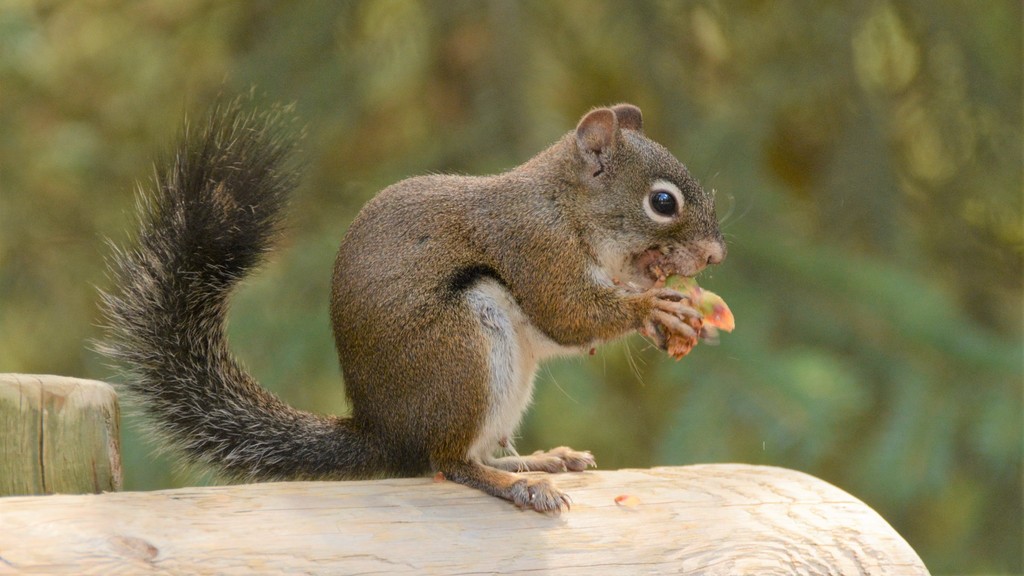

Eyes open does not mean weaned
Continue formula and daily weight tracking
- Continue the 5–7% weight-based volume framework if the baby is tolerating it and gaining normally.
- Keep formula very warm and continue careful syringe technique.
- Do not reduce formula simply because the eyes are open or the baby starts chewing.
- Weigh at the same time each day and look for a steady trend rather than one “perfect” number.
Around 6 weeks — introduce solids in the correct order
- 01First solid: a nutritionally complete squirrel/rodent block. Henry’s Blocks are one source-specific option; the important point is introducing a balanced block before nuts, fruit or treats.
- 02Offer a fresh small piece daily; young squirrels may shred or play with it before actually eating much.
- 03Once chewing well, introduce healthy vegetables and safe wild browse. Remove seeds, pits, skins or strings that create choking risk.
- 04Add clean fresh water in a secure bottle or shallow bowl.
- 05Do not start with nuts, fruit or treats. Those foods can teach the baby to reject the balanced foods it needs.
Housing progression
As coordination improves, move from the neonatal tub into a secure juvenile enclosure with low-risk branches and an elevated nest box/cube. Increase climbing complexity gradually so a weak or clumsy baby does not have a long fall path.
VISUAL REFERENCE
Visual: how quickly the baby changes
A four-week-old and an older juvenile need very different containment. Compare the fur, eyes, tail development and mobility before changing housing.

Elimination transition
Most babies begin eliminating independently around this developmental window, but do not stop stimulation simply because the eyes opened. Stop only when you are consistently seeing normal independent urination/defecation.
Reduce imprinting while still providing care
Keep handling functional rather than social. A releasable juvenile should learn that food, climbing, nest-building and squirrel behaviors are more important than seeking human attention.
Sources
PRIMARY PRACTICAL GUIDEHenry’s Pets — Baby Squirrel Care Guide↗PRIMARY PRACTICAL GUIDEHenry’s Pets — Baby Squirrel Weaning Guide↗DIET REFERENCEHenry’s Pets — Healthy Diet for Squirrels↗REHABILITATOR RESOURCEOrphaned Wildlife Care — Baby Squirrel Care↗REUNIFICATION / WILDLIFE HOSPITALWildlife Center of Virginia — If You Find a Baby Squirrel↗PROFESSIONAL REHABInternational Wildlife Rehabilitation Council — North America Emergency Guidance↗FIND A LICENSED REHABBERAnimal Help Now↗VETERINARY MANUALMerck Veterinary Manual — Care of Orphaned Native Birds and Mammals↗REHABILITATION / NATURAL HISTORYWildAgain — Squirrel Natural History with Rehabilitation Applications↗