
- Use buried predator-proof barriers or another design that prevents digging out.
- Provide substantial clean soil for excavation plus durable artificial tunnels/hides.
- Include shade, rain protection and a dry sleeping chamber.
- Provide several feeding/foraging areas so social animals are not forced to crowd one bowl.
- Add lookout mounds or platforms with immediate access to cover.
- Protect from dogs, cats, raccoons and other predators while allowing exposure to normal outdoor sights and sounds.
AT A GLANCEDo these things before moving on
Use secure outdoor conditioning appropriate to the species and season.
Provide natural cover, nest/burrow space and weather protection.
The animal should forage, hide, move and avoid people normally.
VISUAL GUIDE
See the important points for this stage
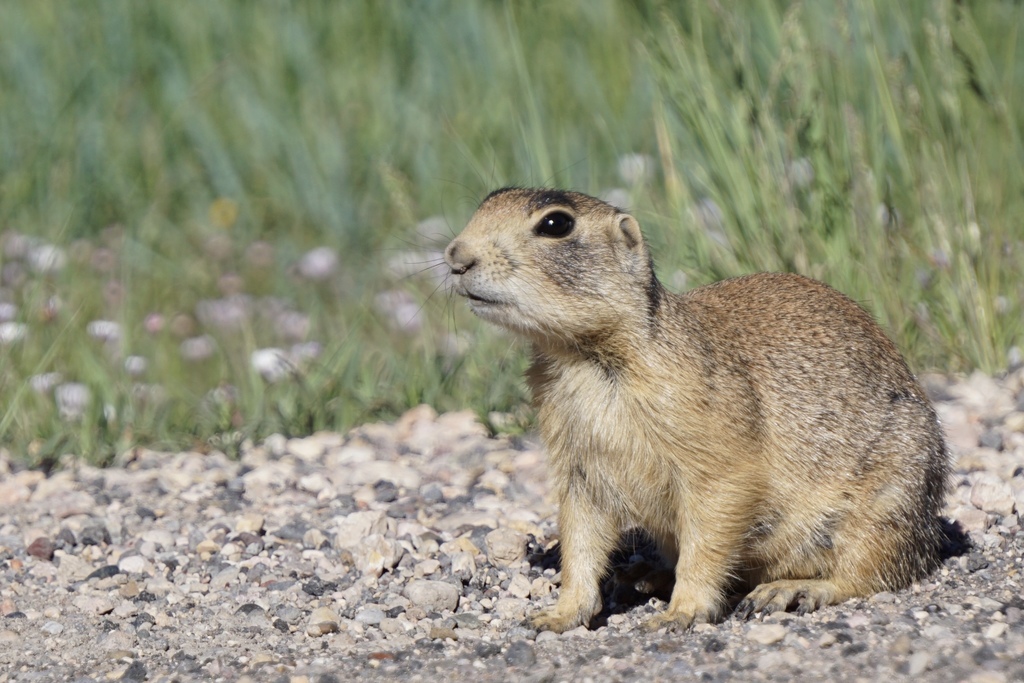


A FLAT CAGE CANNOT PREPARE A PRAIRIE DOG FOR A TOWN
Prairie dogs survive by digging, scanning, communicating and disappearing underground fast. Release should wait until those behaviors are reliable.
1. Build a secure outdoor conditioning enclosure
2. Condition the behaviors release depends on
Digging: actively excavates and maintains shelter.
Retreat: runs to cover immediately when startled.
Lookout: pauses upright to scan before moving through open space.
Foraging: clips, carries and searches for grasses/forbs.
Social: communicates and rests normally with compatible conspecifics.
Human avoidance: does not approach the caregiver for attention or food.
3. Acclimate to weather and seasonal conditions
Outdoor conditioning should span enough time for the animal to experience the temperatures, wind and day length it will face after release. The exact window depends on species and season: black-tailed prairie dogs remain active through much of winter, while white-tailed, Gunnison’s and Utah prairie dogs have stronger seasonal dormancy.
4. Release readiness is a checklist, not a birthday
- Healthy body condition and stable weight
- Fully self-feeding on appropriate forage
- Strong digging/tunnel use and rapid retreat
- Normal vigilance and alarm response
- Minimal human habituation
- Compatible social behavior
- Appropriate season and approved release location
- No unresolved infectious-disease concern in the animal or destination town
Sources
NATURAL HISTORYNational Park Service — Prairie Dogs↗SOCIAL / NATURAL HISTORYNational Park Service — Black-tailed Prairie Dog↗SPECIES / BURROWSNational Park Service — Gunnison’s Prairie Dog↗FEDERAL WILDLIFEU.S. Fish & Wildlife Service — Prairie Dogs (Cynomys)↗VETERINARY NUTRITIONMerck Veterinary Manual — Nutrition in Rodents and Lagomorphs↗VETERINARY MANUALMerck Veterinary Manual — Care of Orphaned Native Birds and Mammals↗