| Approximate age | Typical woodchuck development | Main care transition |
|---|
| Birth–2 weeks | Eyes closed; pigment and fur develop progressively | Constant warmth, hydration assessment, controlled formula, elimination support |
| 3 weeks | Fully furred, eyes still closed, beginning to crawl | More secure housing; continue measured syringe feeds |
| 4 weeks | Eyes begin opening; well-developed teeth; activity rises quickly | Introduce safe natural greens and room to explore while formula remains important |
| 5–6 weeks | Mobile around den age; wild young begin foraging and weaning | Increase natural vegetation, digging substrate and self-feeding |
| 7–8 weeks | Strong, increasingly independent; rehab animals should be eating solids consistently | Outdoor pre-release housing, deep digging area and minimal human contact |
| 10–12 weeks | Wild young are normally independent, though family association can continue | Assess wild behavior, body condition, season and release habitat |
| 13–14 weeks | Common rehabilitation release target for woodchucks after outdoor conditioning | Release only when habitat, weather, body condition and seasonal timing are suitable |
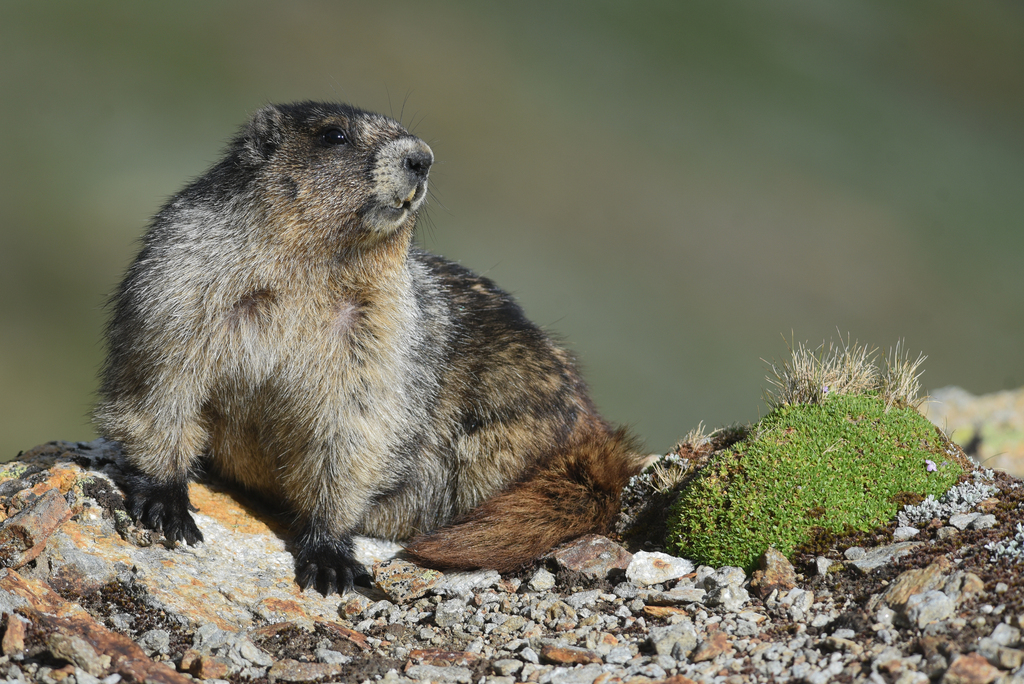
Important: these ages are woodchuck benchmarks, not universal marmot ages. Alpine and colonial species must be matched to their own biology and local season.