
02 · DISTRIBUTION
Where it occurs
Current MDD country distribution: Canada · Guatemala · Honduras · Mexico · United States.
Country-level distribution is a broad map, not a claim that the species occurs throughout every listed country.
Glaucomys volans
Current MDD recognizes this as a living species in tribe Pteromyini.
Current MDD country distribution: Canada · Guatemala · Honduras · Mexico · United States.
Country-level distribution is a broad map, not a claim that the species occurs throughout every listed country.
Deciduous and mixed hardwood forest, pine forest, suburban woodland and mature urban parkland. Natural cavities and connected tree cover are important.
Primarily tree cavities, including abandoned woodpecker holes; nest boxes are readily used and external leaf nests occur occasionally. Nest lining can include moss, leaves, bark fibers and feathers. Multiple animals may den together in winter.
Related flying squirrels help break up the reference while showing how habitat, body form and movement can vary across the broader group.
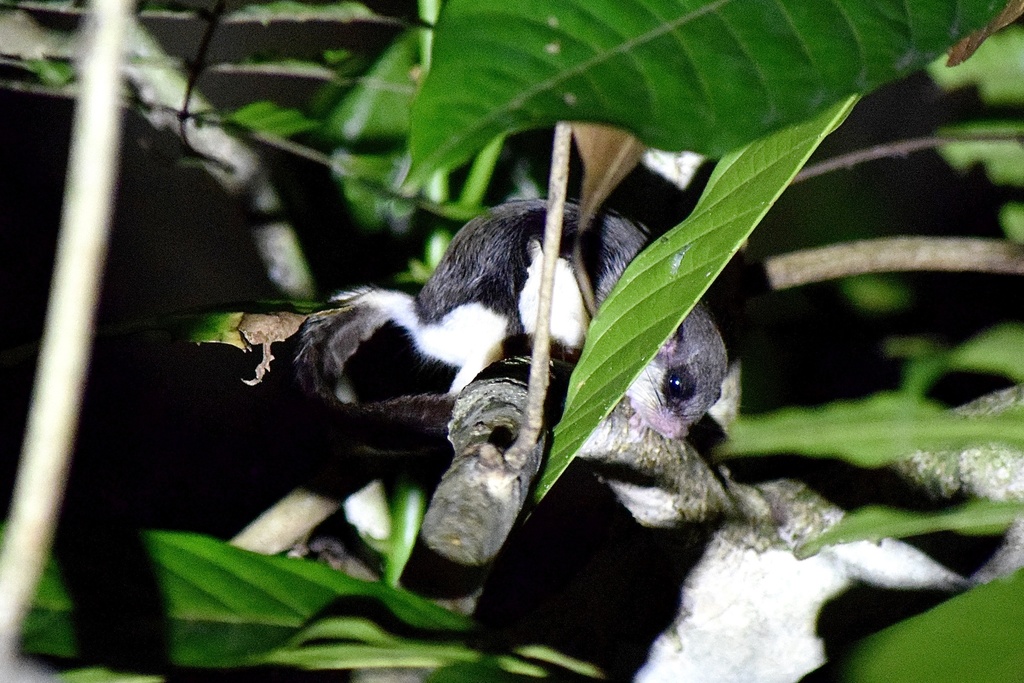
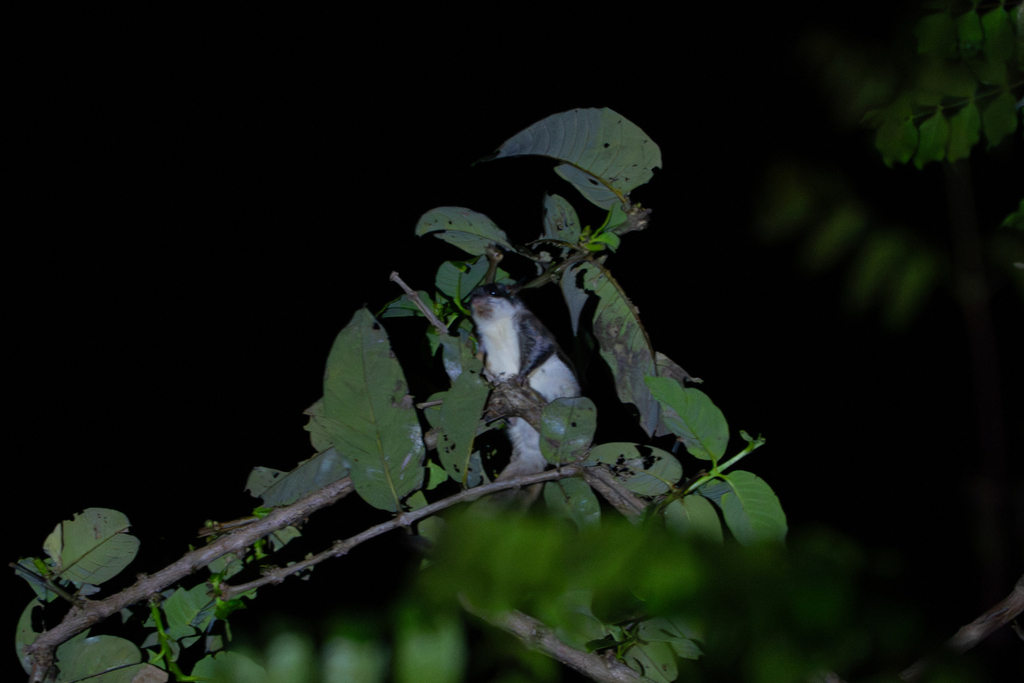
Gray-brown above with a white underside, large dark eyes, a broad flattened bushy tail and a furred patagium between the fore- and hind limbs.
Published references commonly report glides of roughly 30–50 m (100–160 ft).
Pteromyini context: Flying squirrels glide rather than perform powered flight. The patagium creates an aerodynamic surface, specialized wrist structures help support that surface, and the flattened or bushy tail contributes to stability and control.
Activity: Nocturnal. Moves through the canopy by climbing and controlled gliding and can share winter dens with other flying squirrels.
Social system: Can be socially tolerant and may form small nesting groups, especially during cold weather.
Communication: Uses chirps and other quiet vocalizations; scent and close-range social cues also matter.
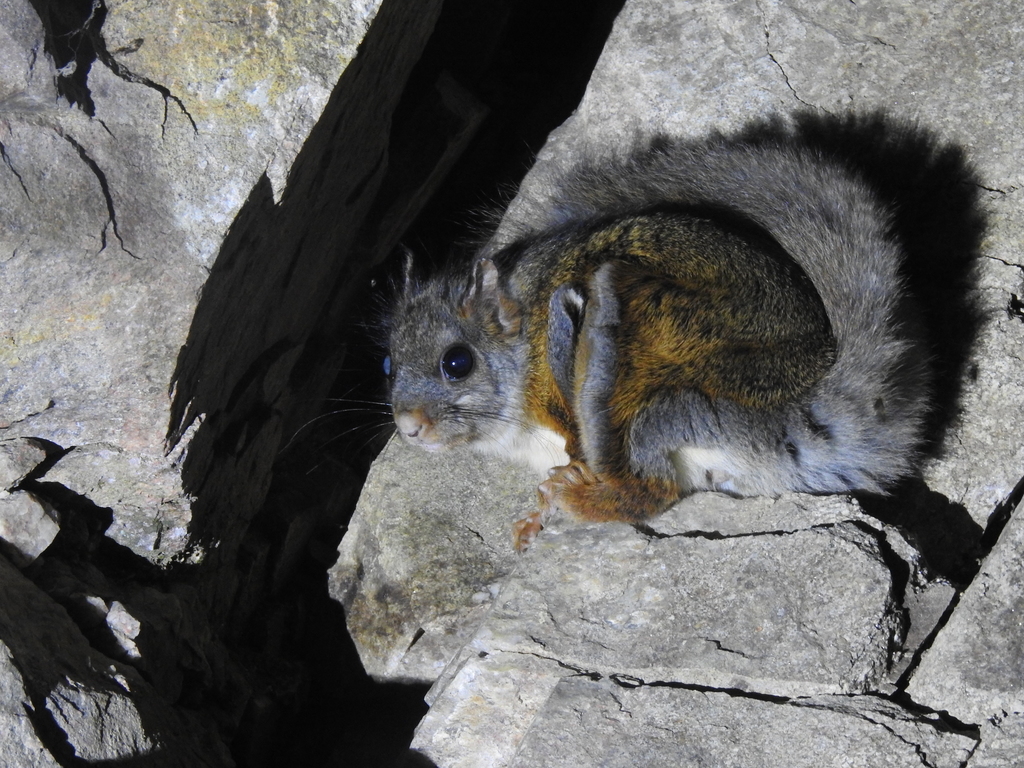
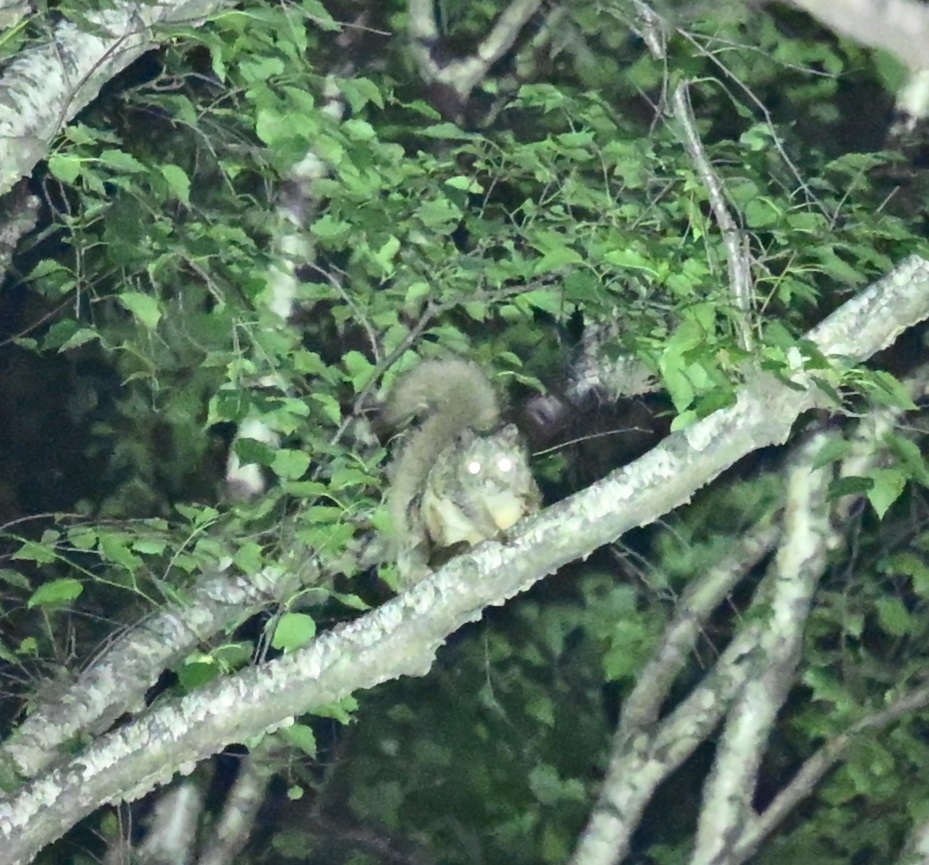
These are related flying squirrels, not photographs of Southern Flying Squirrel. Use them as visual context for locomotion, posture, feeding and environmental use.
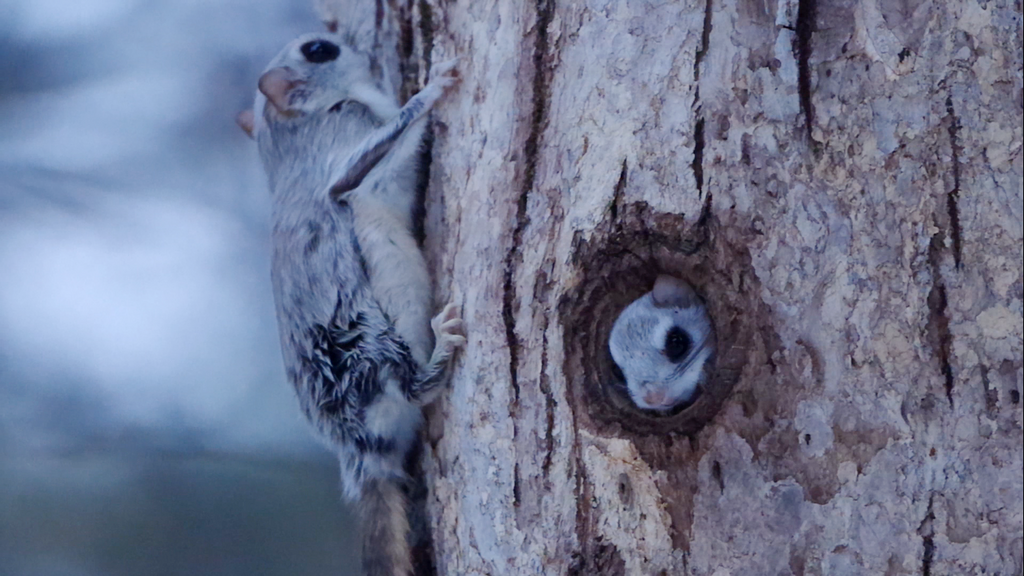
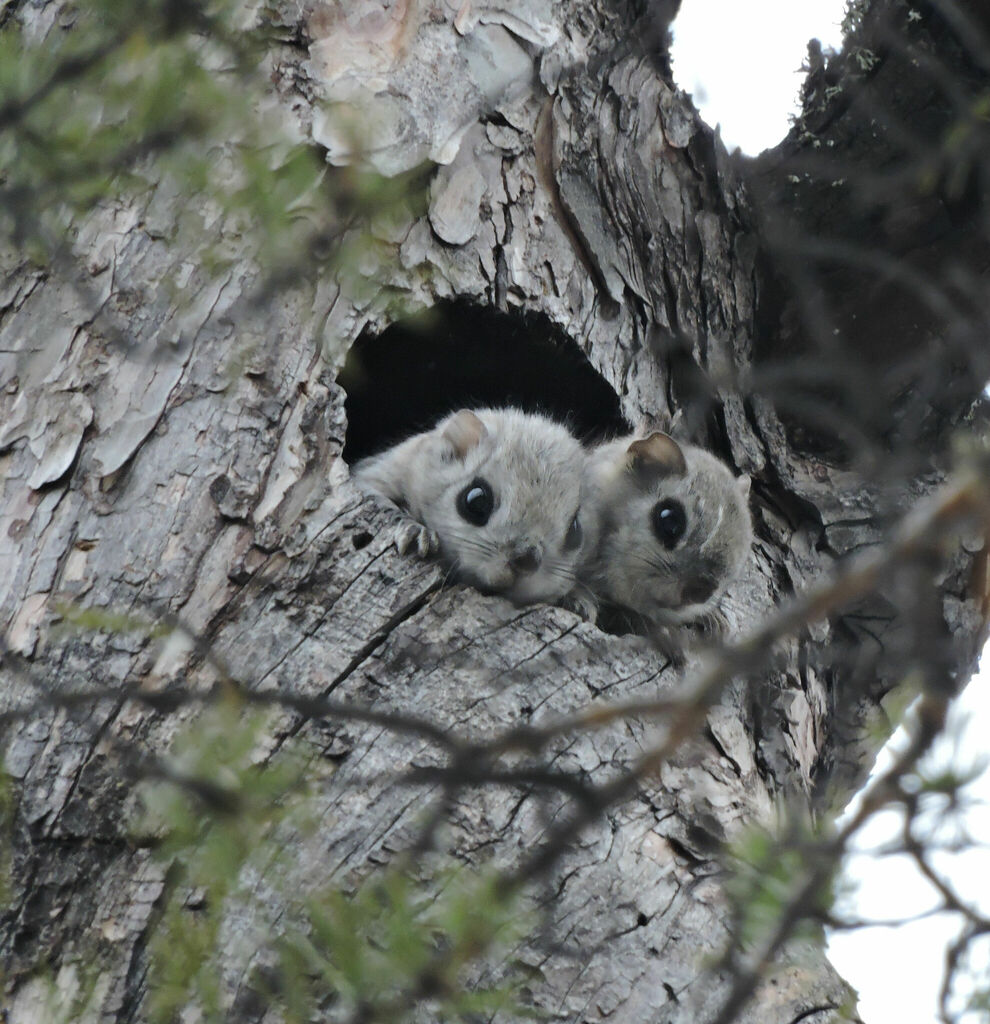
Omnivorous. Common foods include acorns and other nuts, seeds, fruit, fungi and truffles, buds, insects and occasionally bird eggs.
Unknown values remain explicit. Reproductive figures from related flying squirrels are not silently substituted for this species.
Wild and captive longevity varies; exact reliable population-wide lifespan is not reduced here to one number.
Owls, snakes and mammalian carnivores are important predator groups; local predator communities vary.
Consumes and disperses fungal fruiting bodies/spores and caches seeds and nuts, linking canopy foraging with forest-floor processes.
Squirrels in the same broad group can look and live very differently. These credited references provide comparison without changing the facts for Southern Flying Squirrel.
Current MDD status shown above. Species with narrow island or montane distributions can face serious local habitat pressure even when a global assessment is not available.
One of the better-studied flying squirrels in North America, but regional differences in diet, reproduction and social denning should still be kept visible.
Genus context: Glaucomys is a small-to-medium flying-squirrel lineage associated broadly with temperate and boreal forest with connected canopy and den trees. This is genus-level context where direct species-specific data are missing.
Taxonomy, distribution and conservation status follow the Mammal Diversity Database.