Country-level distribution is a broad reference and does not mean the species occurs throughout every listed country or state.
02 · HABITAT
Where it lives
Prairie dogs are open-country ground squirrels associated with grassland, prairie or shrub-steppe depending on species. Soil and vegetation requirements are locally important.
03
Shelter, Burrows & Resting Sites
Prairie dogs construct extensive burrow systems used for refuge, rearing young and thermal shelter. Colony size and burrow architecture vary by species and site.
RANGE & HABITAT CONTEXT
Compare form, setting and structure
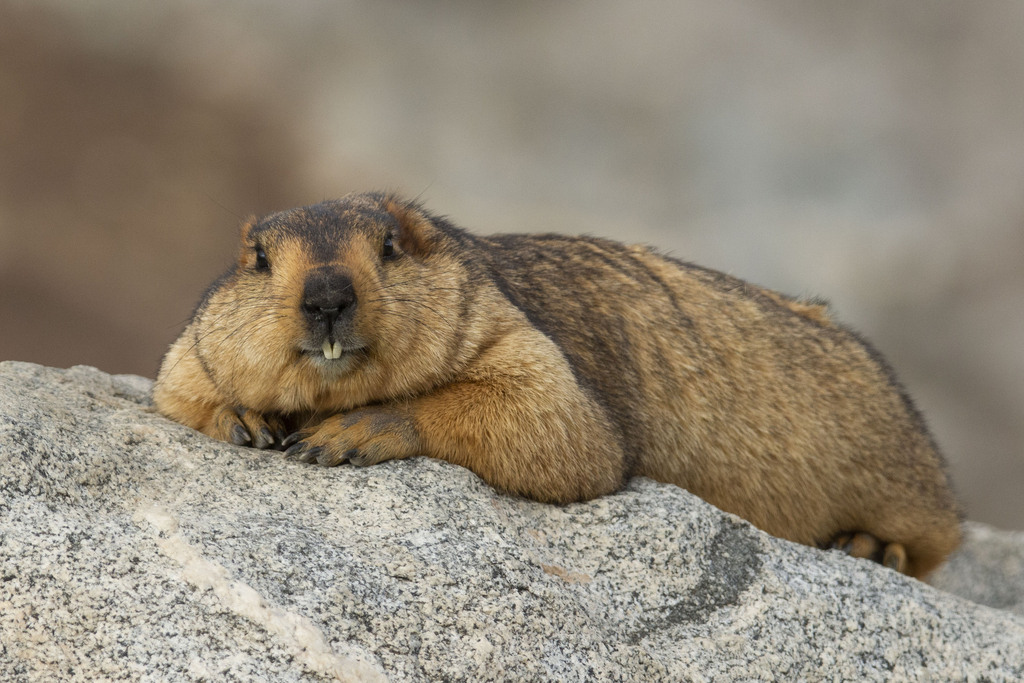
Related ground squirrels help break up the reference while showing how habitat, body form and movement can vary across the broader group.
RELATED GROUND SQUIRRELYellow-bellied MarmotMarmota flaviventris — related group reference for visual comparison; not Black-tailed Prairie Dog.(c) Nick Ellis, some rights reserved (CC BY-NC) · CC-BY-NC · VIEW SOURCE ↗RELATED GROUND SQUIRRELHimalayan MarmotMarmota himalayana — related group reference for visual comparison; not Black-tailed Prairie Dog.(c) Александра Ивушкина, some rights reserved (CC BY-NC) · CC-BY-NC · VIEW SOURCE ↗
04
Identification & Physical Profile
Body lengthUnknown
Tail lengthUnknown
WeightUnknown
AppearanceSpecies-specific adult measurements and diagnostic pelage details are not yet sufficiently standardized in available species-specific references.
Measurements are left Unknown until they can be tied to reliable species-specific sources. This avoids mixing sex, age, season or subspecies ranges from unrelated references.
05
Terrestrial Adaptations & Burrowing
Strong forelimbs and claws support excavation. Upright vigilance, rapid terrestrial running and burrow access are central to prairie-dog life on open ground.
06
Behavior, Activity & Communication
Activity: diurnal prairie dog; activity is centered around open ground and burrow systems
Behavior & communication: Prairie dogs are diurnal and socially organized to varying degrees. Alarm vocalizations and visual vigilance are prominent group traits; species-specific call structure is not generalized here.
BEHAVIOR & FORAGING CONTEXT
Keep behavior connected to the animal
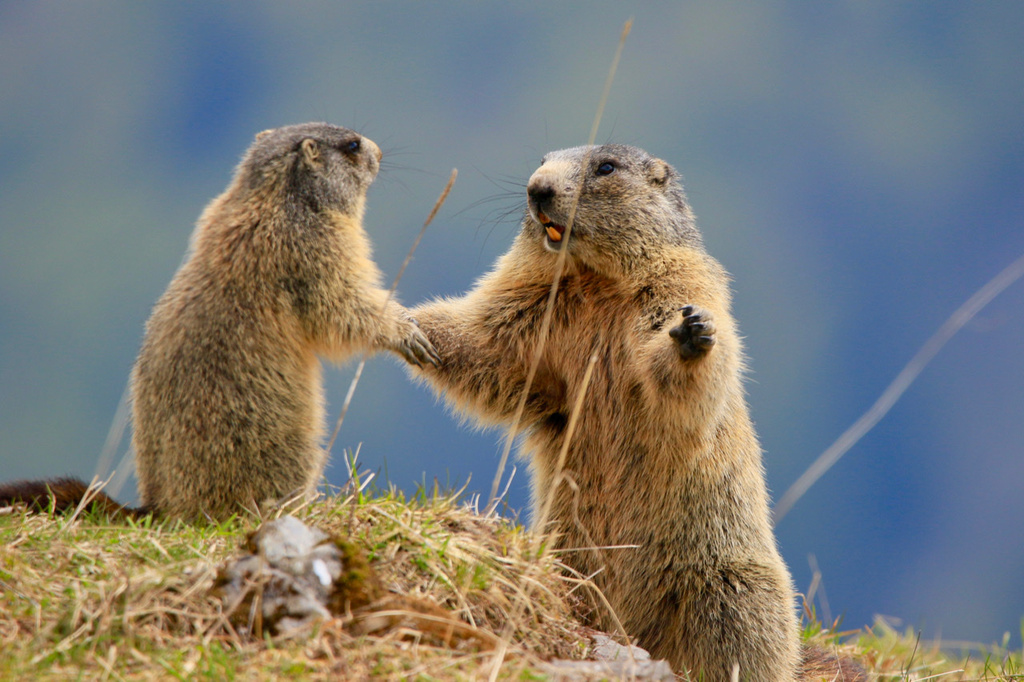
These are related ground squirrels, not photographs of Black-tailed Prairie Dog. Use them as visual context for locomotion, posture, feeding and environmental use.
RELATED GROUND SQUIRRELAlpine MarmotMarmota marmota — related group reference for visual comparison; not Black-tailed Prairie Dog.(c) Boris Mittermeier, some rights reserved (CC BY-NC) · CC-BY-NC · VIEW SOURCE ↗RELATED GROUND SQUIRRELMenzbier’s MarmotMarmota menzbieri — related group reference for visual comparison; not Black-tailed Prairie Dog.(c) Ожегов Андрей (Andrey Ojegov), some rights reserved (CC BY-NC) · CC-BY-NC · VIEW SOURCE ↗
07
Diet & Foraging
Group context: grasses, forbs and other vegetation form the bulk of prairie-dog diets, with exact plant use varying by season and location.
Species-specific diet details remain incomplete
08
Reproduction & Development
Breeding seasonUnknown
GestationUnknown
Litter sizeUnknown
DevelopmentUnknown
Unknown values remain explicit. Reproductive figures from related ground squirrels are not silently substituted for this species.
09 · LONGEVITY
Lifespan
Unknown
09 · PREDATORS
Predation & Risk
Prairie dogs are prey for raptors and a range of mammalian carnivores. Disease and habitat conversion can also be major population pressures.
10
Ecology & Ecosystem Role
Prairie-dog grazing and burrowing can alter vegetation structure, soil conditions and habitat used by other grassland animals.
GROUP DIVERSITY
See the wider group around this species
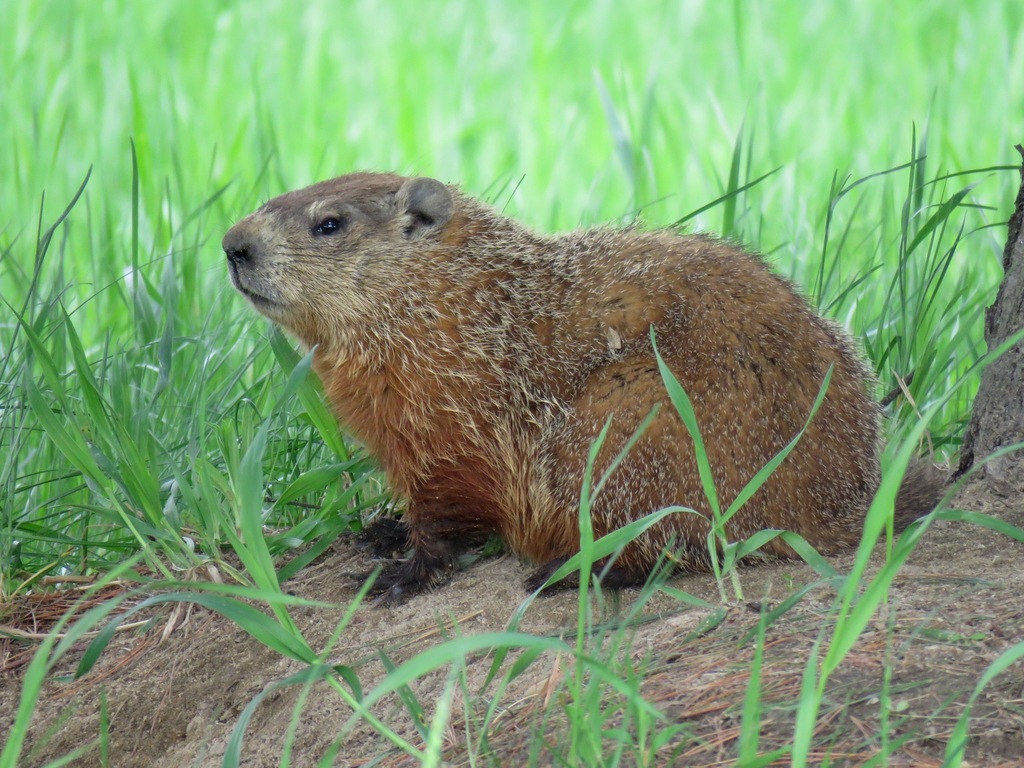
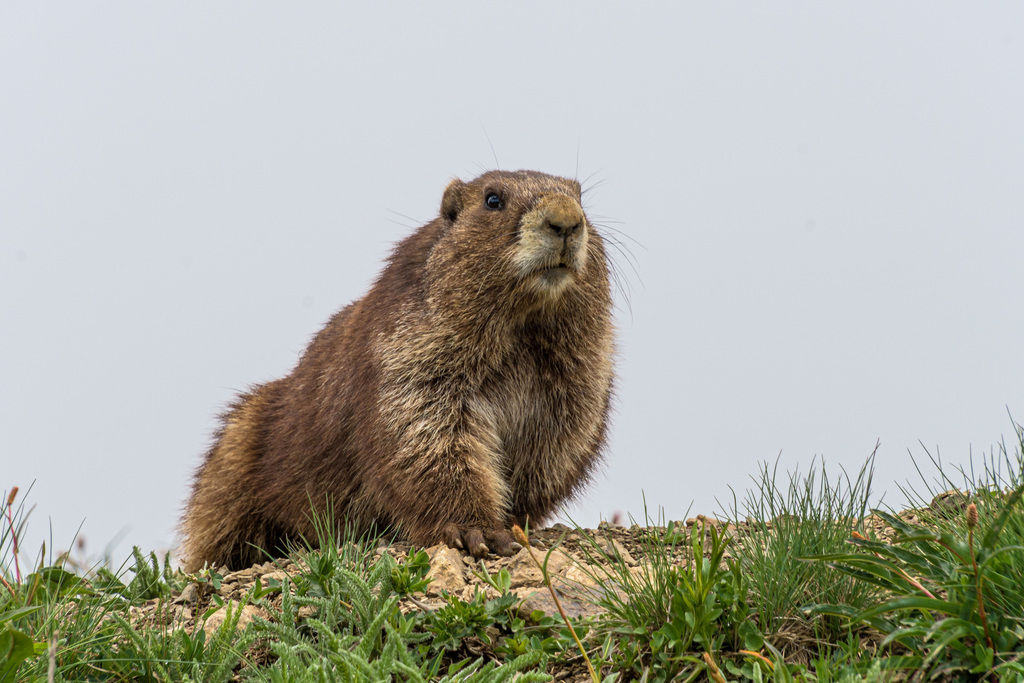
Squirrels in the same broad group can look and live very differently. These credited references provide comparison without changing the facts for Black-tailed Prairie Dog.
RELATED GROUND SQUIRRELWoodchuckMarmota monax — related group reference for visual comparison; not Black-tailed Prairie Dog.(c) Mike Leveille, some rights reserved (CC BY-NC) · CC-BY-NC · VIEW SOURCE ↗RELATED GROUND SQUIRRELOlympic MarmotMarmota olympus — related group reference for visual comparison; not Black-tailed Prairie Dog.(c) Radd Icenoggle, some rights reserved (CC BY-NC) · CC-BY-NC · VIEW SOURCE ↗
11
Conservation
CURRENT MDD / IUCN STATUSLeast Concern
The status above follows the current MDD v2.5 field for this accepted taxon. Country-level range and conservation category can change as assessments and taxonomy are updated.
12
Research Coverage & Unknowns
Taxonomy, country distribution and conservation category are anchored to MDD v2.5. Unsupported measurements, reproductive values and lifespan remain Unknown rather than inferred from related species.
Group context: Cynomys context: colony-forming, burrowing, primarily herbivorous ground squirrels of North American open habitats.
13
References & Further Reading
Taxonomy, country distribution and conservation status follow Mammal Diversity Database v2.5; broader family biology is used only as clearly labeled context.