TREE SQUIRRELS · COMPLETE CARE

Tree Squirrels Care

Arboreal squirrels that need vertical space, varied natural foods, daily movement, browse, secure nesting and careful nutrition.

CARE LIBRARY

Choose what you need

These are reference pages, not a required sequence. Start with Food & Nutrition and Enclosure if you are building a care plan from scratch.

VISUAL REFERENCE

See the animal in natural context

Use the photos as a reminder that body shape, movement, habitat and feeding behavior should guide the setup.

Eastern Fox Squirrel
NATURAL REFERENCEEastern Fox SquirrelNatural history is the blueprint for long-term care.© Tobin Brown, some rights reserved (CC BY-NC) · CC-BY-NC · VIEW SOURCE ↗
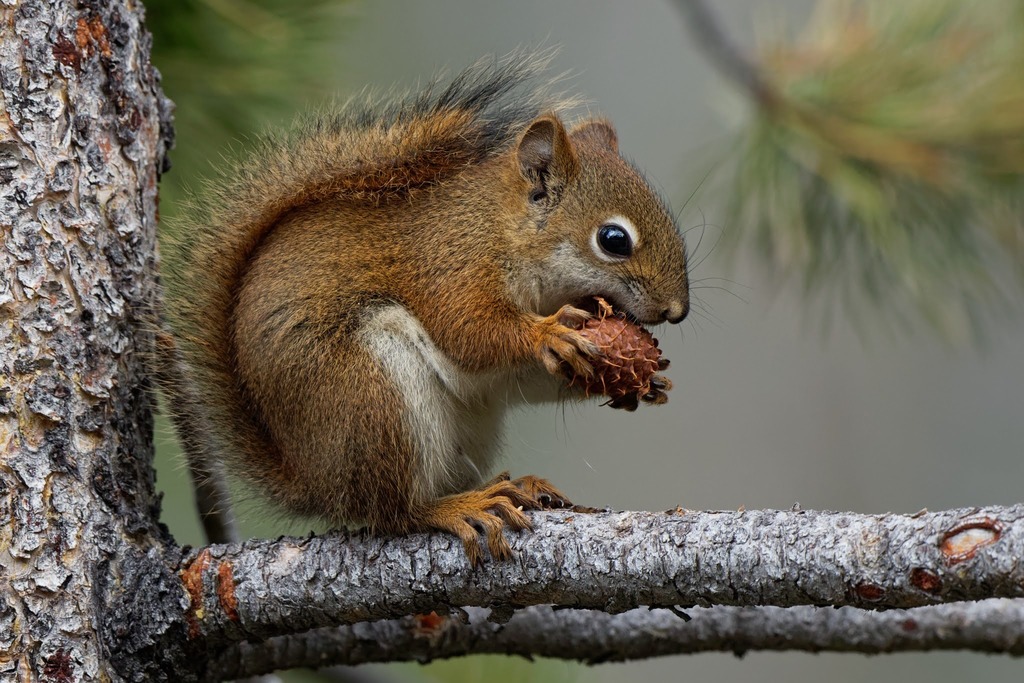
American Red Squirrel
NATURAL REFERENCEAmerican Red SquirrelDiet, housing and behavior must match the animal—not a generic “squirrel” plan.© jmarcinik, some rights reserved (CC BY-NC) · CC-BY-NC · VIEW SOURCE ↗
Douglas Squirrel
NATURAL REFERENCEDouglas SquirrelMovement and foraging should be built into everyday life.© song_dog, some rights reserved (CC BY-NC) · CC-BY-NC · VIEW SOURCE ↗
Southwestern Red Squirrel
NATURAL REFERENCESouthwestern Red SquirrelA good setup makes normal behavior possible without constant human direction.© Terry Lee Crane, some rights reserved (CC BY-NC) · CC-BY-NC · VIEW SOURCE ↗

Care profile at a glance

SCOPE

Tree Squirrel

Eastern gray, fox, American red, Douglas and similar tree squirrels; exact needs still vary by species and individual.

FOOD

Natural diet first

Wild tree squirrels do not live on nuts alone. Depending on species and season they use mast and seeds, buds and flowers, bark and inner plant tissues, fruits and berries, fungi, roots and occasional animal matter such as insects or eggs. Seasonal variety is normal.

HOUSING

Build for the body

Height and route complexity matter. A useful enclosure has several stable climbing routes, flexible branches, elevated resting platforms, at least one protected nest box and enough clear space to leap without striking wire, shelves or hard furniture.

SOCIAL

Do not guess

Tree squirrels are not one uniform social system. Many adult tree squirrels forage independently and may defend food or nest space. Do not assume two animals should share an enclosure because they are the same species. Compatible animals need multiple feeding, resting and escape routes.

A good long-term setup should answer these questions

  1. 01
    Can the animal move the way its species is built to move? Climb, glide, dig, forage, hide and rest without relying on daily free-roam to compensate for a poor enclosure.
  2. 02
    Does the diet still resemble the animal’s ecology? Not item-for-item, but in fiber, variety, plant/animal balance, foraging effort and treat limits.
  3. 03
    Can the animal choose distance? There should be a protected retreat from people, companions, noise and light.
  4. 04
    Will small health changes be noticed? Weight/body condition, teeth, stool, appetite, breathing and activity should have a known baseline.
  5. 05
    Is there a plan for years—not weeks? Aging, seasonal changes, veterinary care, enclosure repairs and backup caregiving are part of husbandry.

Before the animal arrives

Have the core housing, feeding, monitoring and backup-care equipment ready before the animal comes home. Detailed housing requirements are kept on the dedicated Enclosure & Environment page so the rest of this library stays topic-specific.

READY

Primary enclosure

Chew-resistant construction with secure latches; design height as usable climbing space, not empty air.

READY

Nest & retreat boxes

At least one protected nest/retreat for every animal, with extra choice where compatible animals share space.

READY

Climbing network

Fixed trunks/branches, varied diameters, elevated shelves and clear jump routes that do not end in wire or hard obstacles.

READY

Gnaw & browse supply

Known-safe untreated browse/wood, replaced before it becomes splintered, moldy or structurally unsafe.

READY

Food & water stations

Removable, sanitary dishes or bottles positioned so they are not routinely contaminated by waste.

READY

Scale & records

A gram-appropriate scale for smaller species or platform scale for larger individuals, plus a weight/appetite/stool log.

Sources