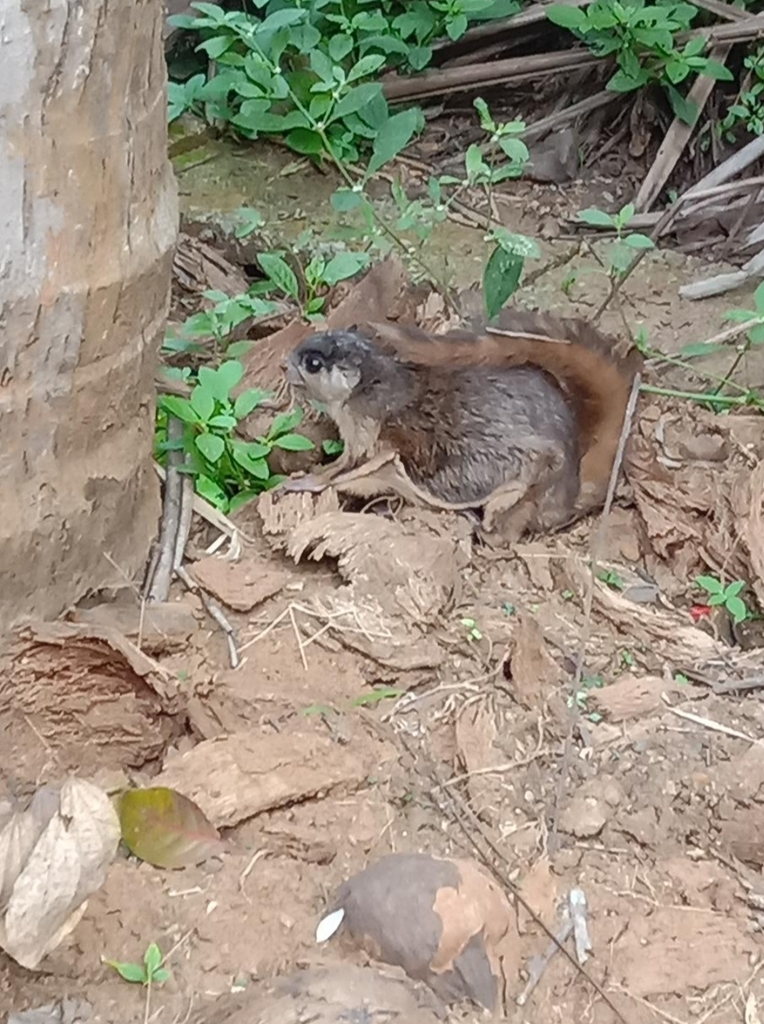
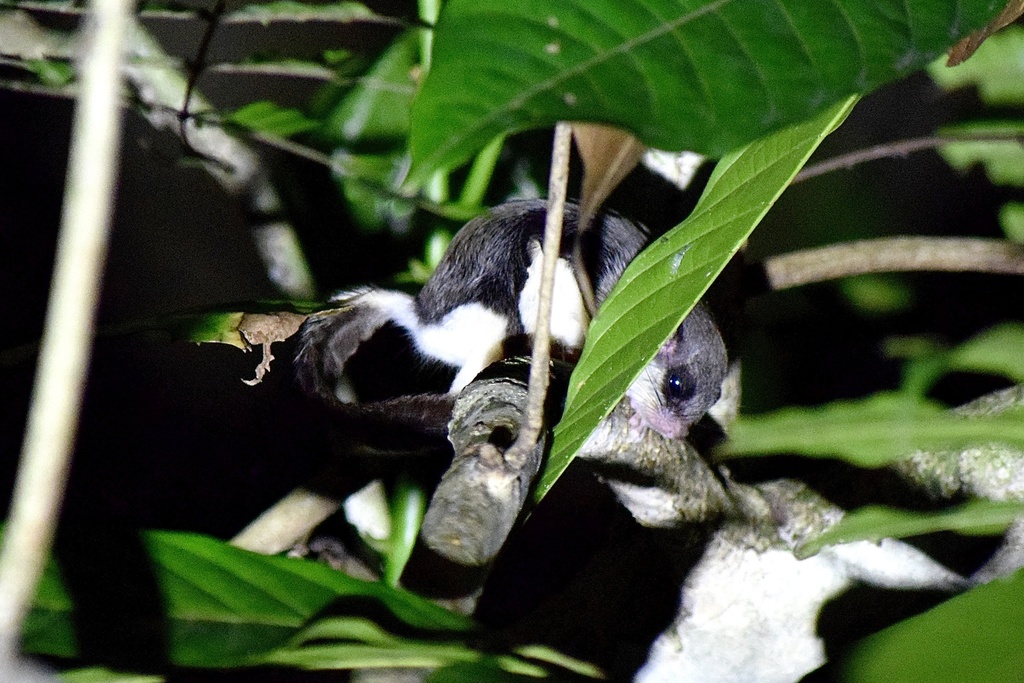
Activitylarge nocturnal gliders capable of long controlled glides
ConservationNot Evaluated
Countries / regionChina · India · Laos · Myanmar · Thailand · Vietnam · Malaysia (possible)
01
Classification & Current Taxonomy
KingdomAnimalia
PhylumChordata
ClassMammalia
OrderRodentia
FamilySciuridae
SubfamilySciurinae
TribePteromyini
GenusPetaurista
SpeciesPetaurista marica
MDD taxon ID1001647
Current MDD recognizes this species separately from Petaurista elegans; some range limits remain uncertain.
02 · DISTRIBUTION
Where it occurs
Current MDD country distribution: China · India · Laos · Myanmar · Thailand · Vietnam · Malaysia (possible).
Country-level distribution is a broad map, not a claim that the species occurs throughout every listed country.
02 · HABITAT
Where it lives
Current MDD country distribution: China · India · Laos · Myanmar · Thailand · Vietnam · Malaysia (possible). Species-specific forest type, elevation limits and microhabitat use are not fully summarized here. Genus context: Asian tropical, subtropical and montane forest with tall connected canopy.
03
Shelter, Nest & Resting Sites
Species-specific den and nest data: Unknown. Genus context: tree cavities and large arboreal nests/secure tree sites. This is context, not a substitute for direct observations of Indochinese Giant Flying Squirrel.
RANGE & HABITAT CONTEXT
Compare form, setting and structure
Related flying squirrels help break up the reference while showing how habitat, body form and movement can vary across the broader group.
RELATED FLYING SQUIRRELTravancore Flying SquirrelPetinomys fuscocapillus — related group reference for visual comparison; not Indochinese Giant Flying Squirrel.(c) Birders Thodupuzha, some rights reserved (CC BY-NC) · CC-BY-NC · VIEW SOURCE ↗RELATED FLYING SQUIRRELWhiskered Flying SquirrelPetinomys genibarbis — related group reference for visual comparison; not Indochinese Giant Flying Squirrel.(c) stefanie_de_win, some rights reserved (CC BY-NC) · CC-BY-NC · VIEW SOURCE ↗
04
Identification & Physical Profile
Body lengthUnknown
Tail lengthUnknown
WeightUnknown
AppearanceSpecies-specific adult measurements and diagnostic pelage details are not yet sufficiently standardized in available species-specific references. Genus context: Petaurista is a large / giant flying-squirrel lineage; exact field identification should use locality, measurements and current taxonomic references together.
Species-specific adult measurements and diagnostic pelage details are not yet sufficiently standardized in available species-specific references. Genus context: Petaurista is a large / giant flying-squirrel lineage; exact field identification should use locality, measurements and current taxonomic references together.
05
Gliding Anatomy & Locomotion
As a member of Pteromyini, this species uses a furred patagium between the fore- and hind limbs for controlled gliding. Wrist-supported membrane anatomy and the tail contribute to lift, steering, braking and landing. Species-specific maximum glide distance: Unknown.
Pteromyini context: Flying squirrels glide rather than perform powered flight. The patagium creates an aerodynamic surface, specialized wrist structures help support that surface, and the flattened or bushy tail contributes to stability and control.
06
Behavior, Activity & Communication
Activity: large nocturnal gliders capable of long controlled glides
Social system: Unknown at species-specific detail.
Communication: Unknown at species-specific detail. Flying squirrels also use scent, posture and acoustic signals, but a species-specific repertoire is not assigned without direct evidence.
BEHAVIOR & FORAGING CONTEXT
Keep behavior connected to the animal
These are related flying squirrels, not photographs of Indochinese Giant Flying Squirrel. Use them as visual context for locomotion, posture, feeding and environmental use.
RELATED FLYING SQUIRRELSiberut Flying SquirrelPetinomys lugens — related group reference for visual comparison; not Indochinese Giant Flying Squirrel.(c) mark_spence, some rights reserved (CC BY-NC) · CC-BY-NC · VIEW SOURCE ↗RELATED FLYING SQUIRRELMindanao Flying SquirrelPetinomys mindanensis — related group reference for visual comparison; not Indochinese Giant Flying Squirrel.(c) Forest Botial-Jarvis, some rights reserved (CC BY) · CC-BY · VIEW SOURCE ↗
07
Diet & Foraging
Species-specific diet: Unknown or incompletely documented in available references. Genus context: mostly plant-heavy diets including leaves, buds, fruit, nuts and bark; species-specific emphasis varies.
Unknown
08
Reproduction & Development
Breeding seasonUnknown
GestationUnknown
Litter sizeUnknown
DevelopmentUnknown
Unknown values remain explicit. Reproductive figures from related flying squirrels are not silently substituted for this species.
09 · LONGEVITY
Lifespan
Unknown
09 · PREDATORS
Predation & Risk
Species-specific predator list: Unknown. Flying squirrels are broadly preyed on by nocturnal raptors, snakes and mammalian carnivores, with the exact predator community depending on region.
10
Ecology & Ecosystem Role
Species-specific ecological role is incompletely documented. Genus context: large-bodied folivore/frugivore/seed consumer that can influence canopy plant resources.
GROUP DIVERSITY
See the wider group around this species
Squirrels in the same broad group can look and live very differently. These credited references provide comparison without changing the facts for Indochinese Giant Flying Squirrel.
RELATED FLYING SQUIRRELTemminck’s Flying SquirrelPetinomys setosus — related group reference for visual comparison; not Indochinese Giant Flying Squirrel.(c) Jay Ballard, some rights reserved (CC BY-NC) · CC-BY-NC · VIEW SOURCE ↗RELATED FLYING SQUIRRELHimalayan Large-eared Flying SquirrelPriapomys leonardi — related group reference for visual comparison; not Indochinese Giant Flying Squirrel.(c) robinnnnnn, some rights reserved (CC BY-NC) · CC-BY-NC · VIEW SOURCE ↗
11
Conservation
CURRENT MDD / IUCN STATUSNot Evaluated
Current MDD status shown above. Species with narrow island or montane distributions can face serious local habitat pressure even when a global assessment is not available.
12
Research Coverage & Unknowns
Natural-history coverage is incomplete. Taxonomy, current country distribution and conservation category are anchored to MDD; unsupported measurements, reproduction and lifespan remain Unknown rather than inferred from relatives.
Genus context: Petaurista is a large / giant flying-squirrel lineage associated broadly with Asian tropical, subtropical and montane forest with tall connected canopy. This is genus-level context where direct species-specific data are missing.
13
References & Further Reading
Taxonomy, distribution and conservation status follow the Mammal Diversity Database.